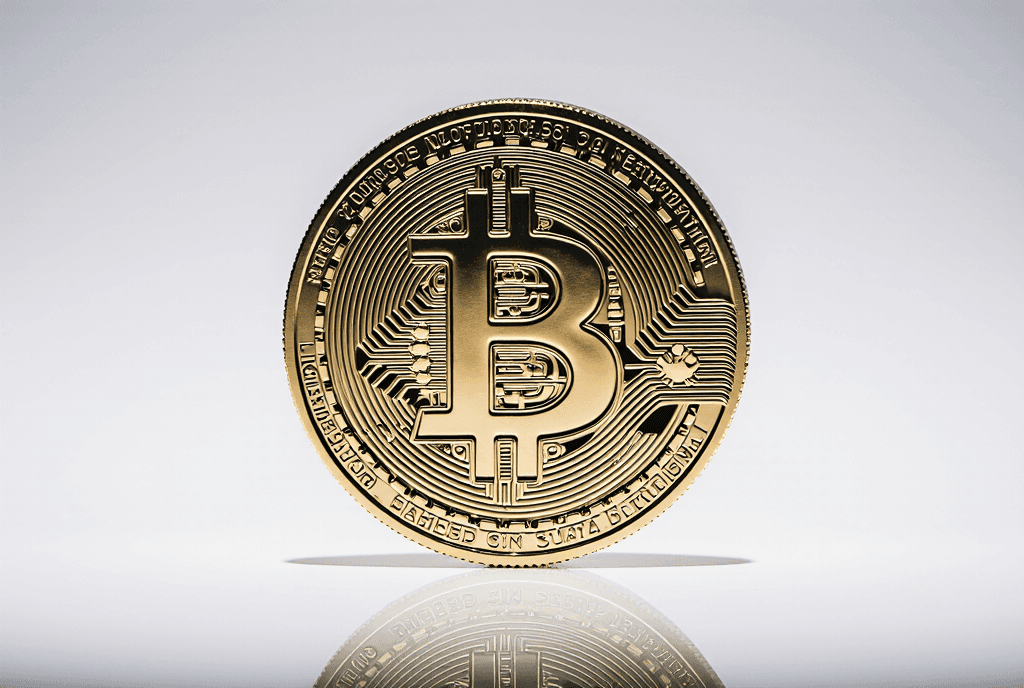
Why Does Bitcoin Have Value?
Most people who dismiss Bitcoin do so without first examining the system it was designed to compete with.
Fiat money, the kind issued by governments and managed by central banks, has no fixed supply. More can be created at any point, and in practice, more usually is. When supply increases without a corresponding rise in demand, purchasing power falls. That is inflation, and for many economists it is not an accident of the system. It is a structural feature of it.
Bitcoin was built as a direct response to that dynamic.
Its supply is capped at 21 million units. That limit is written into the code. No government, central bank, or corporation can change it. Roughly 1.32 million Bitcoin remain unmined, and an estimated three to four million are considered permanently lost. The available pool is shrinking, while demand is moving in the other direction.
That scarcity, combined with the ability to send value anywhere in the world almost instantly and at minimal cost, gives Bitcoin properties that gold has always possessed, plus the practicality that gold never could.
The adoption numbers are harder to dismiss
During 2025, the number of publicly listed companies holding Bitcoin grew 2.5 times to 194 firms. Around 60 per cent of the top 25 US banks are now developing or offering Bitcoin-related services. At least 23 nation-states hold Bitcoin in some form, with five new countries joining last year including Saudi Arabia and the Czech Republic. Merchant acceptance grew by 74 per cent.
This is not fringe behaviour. It is a fairly broad shift in how institutions and governments are beginning to treat Bitcoin as a legitimate financial asset.
So why does it have value?
Because it solves a real problem. In a world where the purchasing power of government-issued currency is structurally eroded over time, Bitcoin offers a fixed supply, no central point of control, and the ability to transfer value between any two people anywhere on earth without a bank in the middle.
Whether it belongs in your own financial picture is a separate question, and one worth taking seriously. Understanding why it has value at all seems like a reasonable place to start.
This article is for informational purposes only and does not constitute financial advice. The value of investments can go down as well as up.


The launch provides financial advisers first-time access to PIMCO’s UK Retiremen...
Sep 29, 2026

A seasoned multi-asset investor, Widdows has previously held roles at Blackrock,...
Sep 8, 2026


Subscribe
Subscribe for our latest news & updates